Thursday, July 18, 2013
MA 260 / Week Four Discussion: How has the commercial nature of television influenced the content of television programming?
How has television content been greatly influenced by Nielsen ratings? How have program formats changed because of the mandate of advertising dollars?

MA 260 / Week Four Discussion: How did television influence the ethos of our American culture in both positive way and negative way?
Use pros and cons approach to evaluate television's impact on our society: How did television relate to our learning habit? how television relate to consumer culture and materialism? How television relate to our political election? How television relate to our family life and interpersonal relationship?
COM 325 / Week Four Discussion: Explain how Islamic religion and Islamic history go hand in hand.
The Islamic religion and Islamic history have been highly conflated since the establishment of both the Islamic religion and Muslim empires. Use the conflict between Sunnis and Shi'ites to show the high degree of overlapping between Islamic religion and Islamic history (the formation of the Muslim nation-states).
COM 325 / Week Four Discussion: Why are Mexicans proud of the pre-Columbian era (300 BCE - 1519 CE) ?
Even though 90% of the population was decimated immediately following the Spanish Conquest that began in 1519, most Mexicans (whom are actually more directly descended from the conquistadors than the natives) now identify strongly with their pre-Columbian heritage. Can you explain why?
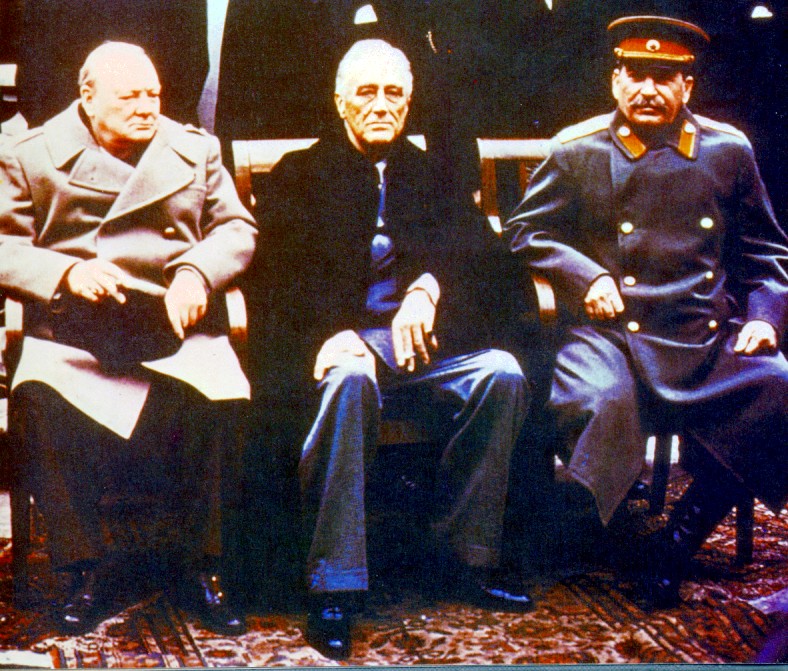
COM 325 / Week Three Discussion: How should we view Red Russia's contribution to the World War II victory over Fascism?
In
the most dreadful days of the Cold War years, President JFK acknowledged the great sacrifices made by the Soviet Union for the world salvation from Nazi domination. He
said:
"...no nation in the history of battle ever suffered more than the Soviet Union suffered in the course of the Second World War. At least 20 million lost their lives. Countless millions of homes and farms were burned or sacked. A third of the nation’s territory, including nearly two thirds of its industrial base, was turned into a wasteland, a loss equivalent to the devastation of this country east of Chicago."
Did you know that during WWII, the Soviet Union was the victorious ally of the United States in the fight against the Axis Powers (although there was mutual distrust)? Have history textbooks and the mass media done a good job of explaining why a victorious ally ended up as an "Evil Empire"? How?

"...no nation in the history of battle ever suffered more than the Soviet Union suffered in the course of the Second World War. At least 20 million lost their lives. Countless millions of homes and farms were burned or sacked. A third of the nation’s territory, including nearly two thirds of its industrial base, was turned into a wasteland, a loss equivalent to the devastation of this country east of Chicago."
Did you know that during WWII, the Soviet Union was the victorious ally of the United States in the fight against the Axis Powers (although there was mutual distrust)? Have history textbooks and the mass media done a good job of explaining why a victorious ally ended up as an "Evil Empire"? How?
COM 325 / Week Four Discussion: How is history "a pact between the dead, the living, and the yet unborn"?
"The past causes the present" and "history illumines reality." Therefore, the narrative of a people's history has never been neat and easy. Our common memory and tacit agreement about what happened in the past has been a major battlefield among different political ideologies. How we tell the history of our nation can significantly influence our expectations for future generations. Consider how the following two US history books were reviewed by Goodreads (http://www.goodreads.com/). How can history be viewed as "a pact between the dead, the living, and the yet unborn"? Explain.
(1) Howard Zinn: A People's History of the United States: 1492 to Present"
Review on Goodread


(2) Larry Schweikart and Michael Patrick Allen: A Patriot’s History of the United States: From Columbus’s Great Discovery to the War on Terror.
Review on Goodread:

(1) Howard Zinn: A People's History of the United States: 1492 to Present"
Review on Goodread


(2) Larry Schweikart and Michael Patrick Allen: A Patriot’s History of the United States: From Columbus’s Great Discovery to the War on Terror.
Review on Goodread:

COM 325 / Week Four Discussion: Why Is History Our "Religion"?
Our textbook cites several reasons for a people to know its history so the people can know "who they are" and "where they ought to go." History is a divine narrative of the people since its "genesis." History lets people know that they have a special purpose on this planet. In a sense, history is our god, our religion, and our destiny. Tell us how your study of American history, such as the concept of "manifest destiny," relates to your identity, values, and worldview.


Subscribe to:
Posts (Atom)